Why Beleeve?
Behind the Beleeve
There was a moment when I thought: Is this all there is?
Everything looked good on paper. Great career, solid title, a resume to be proud of.
But inside… it felt like I had lost myself somewhere along the way.
In IT, I quickly learned the rules.
Be sharp. Be fast. Don’t be too soft.
I adapted. A little more each time. Until one day I woke up and thought:
I work in a sector that is so progressive in technology and so behind on humanity.
I saw amazing colleagues drop out with burnouts.
Women who gave up, not because they couldn’t do it, but because they were tired of fighting.
Trans people who didn’t really fit in anywhere.
And myself?
I played roles to be found credible.
Until I was done with it.
Beleeve arose from that boundary.
The boundary between adapting and living your truth.
Between performing and thriving.
Between surviving and daring to build something that feels right.
I no longer believe in systems that burn people out.
I believe in companies where you can breathe.
Where there is room for softness and ambition.
Where inclusion is not a project, but the foundation.
Not because it has to be. But because it is better. Fairer. More humane.
Beleeve is that company. And this time, we rewrite the rules ourselves.
There comes a moment when you can no longer deny it.
That your eyes are open, and you can no longer close them.
That you see how rotten the system actually is and you wonder how we ever started to find this normal.
For me, that moment came gradually. And then suddenly, very hard.
I worked in the IT sector. For years.
A world full of smart people, big ambitions, technical splendor.
But also a world in which:
-
Working overtime was seen as dedication
-
Burnouts were ticked off as a calculated risk
-
Flexibility meant: always available
-
Promotions went to the person with the loudest voice, not the greatest talent
-
You were allowed to be yourself, as long as it fit within the picture
-
Salaries are vague and negotiations favor extroverts
-
Growth is more important than recovery
-
And success is punished with even more work
I was stuck in that world for too long. In organizations that seemed to revolve around people, but were built on control, hierarchy and profit maximization.
Where beautiful words like “inclusion” and “safety” were on the website, but in practice it was about KPIs, egos and who you knew.
Where technicians are held responsible for people and results, without the right tools or support.
Where positions standardly require 40 hours, thereby excluding a huge group of part-time talents in advance.
Where money goes to shareholders or investors, instead of to a better workplace or the world outside.
I have seen how ideas from the work floor disappear into decks with someone else’s name on them.
How HR does not protect the culture, but the system.
How “self-management” is praised, but rarely really allowed.
How managers make decisions about people, without people.
I have felt what it means to no longer be taken seriously for granted after your transition.
To suddenly be considered ‘too soft’.
To be yourself and still be sidelined.
To have to wear masks until you no longer recognize yourself.
To share ideas that are only taken seriously when someone with ‘the right status’ repeats them.
And then that sentence:
“We are quite diverse, aren’t we?”
Yes. On paper.
As long as the top remains white and male.
As long as deviation is only tolerated if it doesn’t cause friction.
As long as visibility is something for LinkedIn in June and then becomes quiet again.
As long as inclusion remains a buzzword, but does not receive a mandate.
We are all fishing in the same, depleted pond.
We keep saying that it is difficult to find diverse talent, while we refuse to look at things differently.
We build work environments that simply don’t work for the majority of people.
We develop technicians, not people.
We turn work into something you survive instead of something you grow in.
And we continue to find that normal.
Seriously: what on earth are we doing?
Most people do want something different. They just don’t know how, or feel too small to change the system.
Beleeve is my answer to everything I’m fed up with.
It’s not a project. No strategy. No branding story.
It is my calling.
And if your calling transcends all limiting beliefs, then you know:
It’s time to take action.
I want to build a workplace that feels right.
A place where trust is the starting point, and control is the last resort.
Because control does not create safety. It creates false security.
Real safety arises when people are allowed to be themselves. Not because it is in a handbook, but because the system is built on trust.
Where you don’t have a title, but your own rhythm. Your own path.
Where work does not exhaust, but nourishes.
Where you don’t have to choose between humanity and professionalism.
Where your whole self is welcome, not just the parts that look good on LinkedIn.
Not occasionally with a fun outing, but every day.
Where you flourish because you are human. Not in spite of.
Where there is room for softness. For recovery. For who you are, not just what you deliver.
Where employees are invited to bring their full selves: Emotions, intuition, vulnerability, even spirituality.
Work is not acting. You don’t have to chop yourself into pieces to be professional. Humanity belongs to work.
I want to put an end to a sector that:
-
Burns out technicians for the deadline
-
Uses diversity for PR, not for decision-making
-
Manages purpose instead of living it
-
Considers profit more important than well-being
-
And dehumanizes work under the guise of “efficiency”
I want a company that:
-
Does not celebrate diversity with stickers, but anchors it in structure
-
No leadership out of ego or fear of losing control, but people who take the lead when it feels right
-
Does not see profit as the highest goal, but as a means for humanity
-
Money is not the goal. Impact is the course. And people are the compass
-
Carries out annual impact projects. Not out of obligation, but from the intrinsic motivation of the team
-
Is committed to social impact, education, and the greater whole
-
Does not want to become bigger, but better. And fairer
-
Works from a different principle: no MVP, but a Minimum Loveable Product: something people love because it feels good
I want to build a culture based on the best of what I have seen:
Lagom, Fika, Arbejdsglæde, Frihet under ansvar.
No empty terms but proven working principles from cultures where well-being is not a side issue.
Scandinavian softness combined with technological sharpness.
A company as a counterweight. As a reset. As an alternative.
Human-centered tech
Technology is not a goal in itself. It is a powerful tool if you build it with people as the starting point.
Beleeve chooses technology that supports, connects, strengthens.
Not the fastest, but the most meaningful solution.
Not optimizing to optimize, but designing for life.
And we don’t do that top-down.
Decision-making takes place decentrally, via trust, transparency and shared ownership.
No leadership based on power, but on the basis of roles, trust and collective intelligence. Because leadership is not a function. It is a moment. Sometimes you stand up. Sometimes me. And sometimes we just listen. That is enough.
Organizations are not machines. They are living systems, with their own direction and rhythm.
At Beleeve, we listen together to where it wants to go. Not where it should.
Beleeve is a company. But not as you are used to. It is the revolution.
Not with a blueprint, but with a compass.
We build while we listen. To what is needed, to what feels right. Because an organization also lives. It moves, it breathes, it grows.
I want to show that it can be done differently. That it must.
That it works.
And if you read this and think: yes, I feel this too, then you know what you have to do.
Because once you see it, you can’t unsee it.
I am at the beginning.
I don’t know yet how to get there.
But: I beleeve. Do you?
Love,
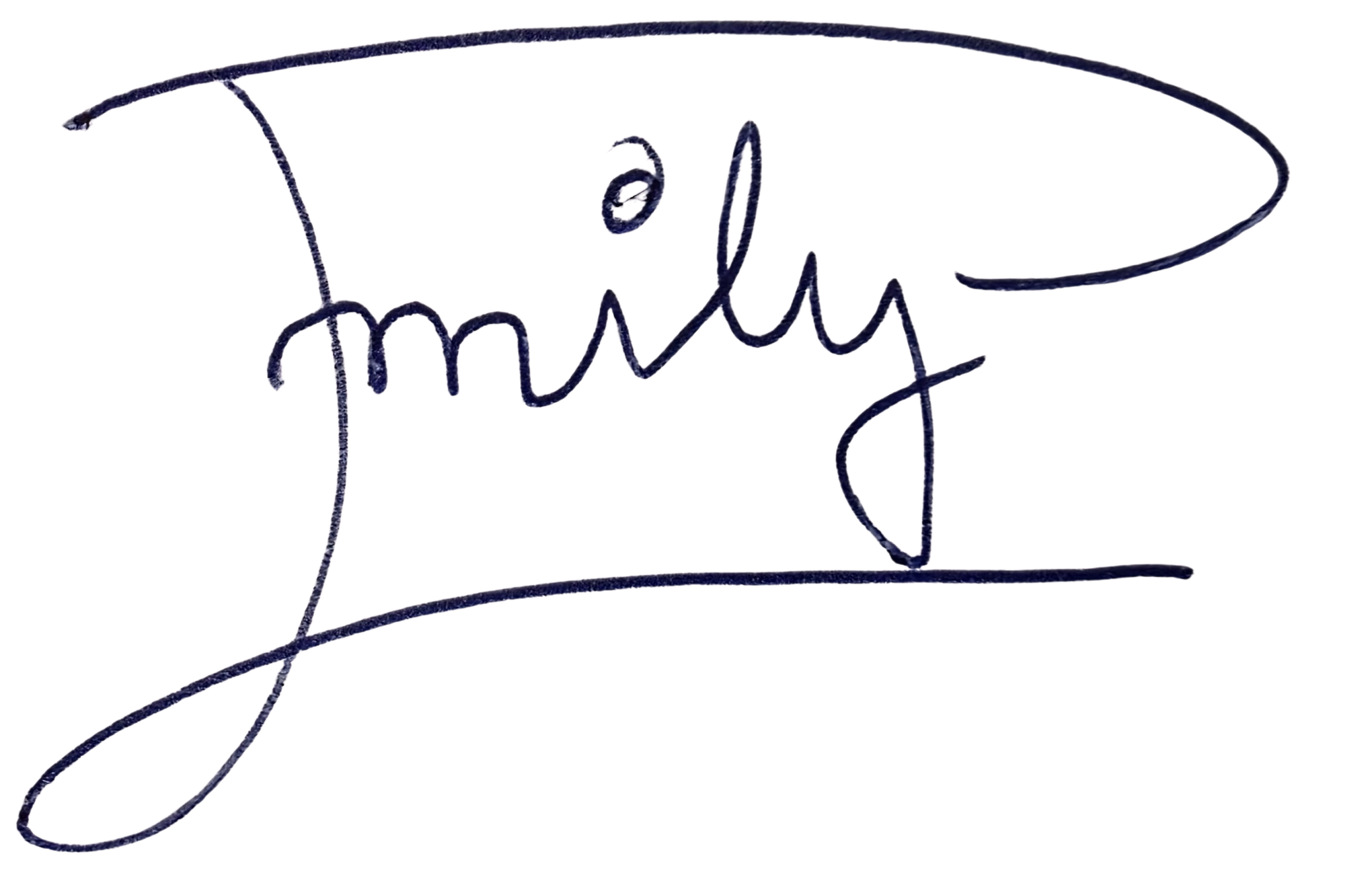
Emily van Putten